Sliding Doors: What to Look For Before You Buy
Most sliding door quotes look alike until you compare the sightlines, the threshold and the track. Those three details decide how the doors look shut, whether they leak, and whether they still glide in ten years. The glass is rarely the thing that separates a good installation from a bad one.
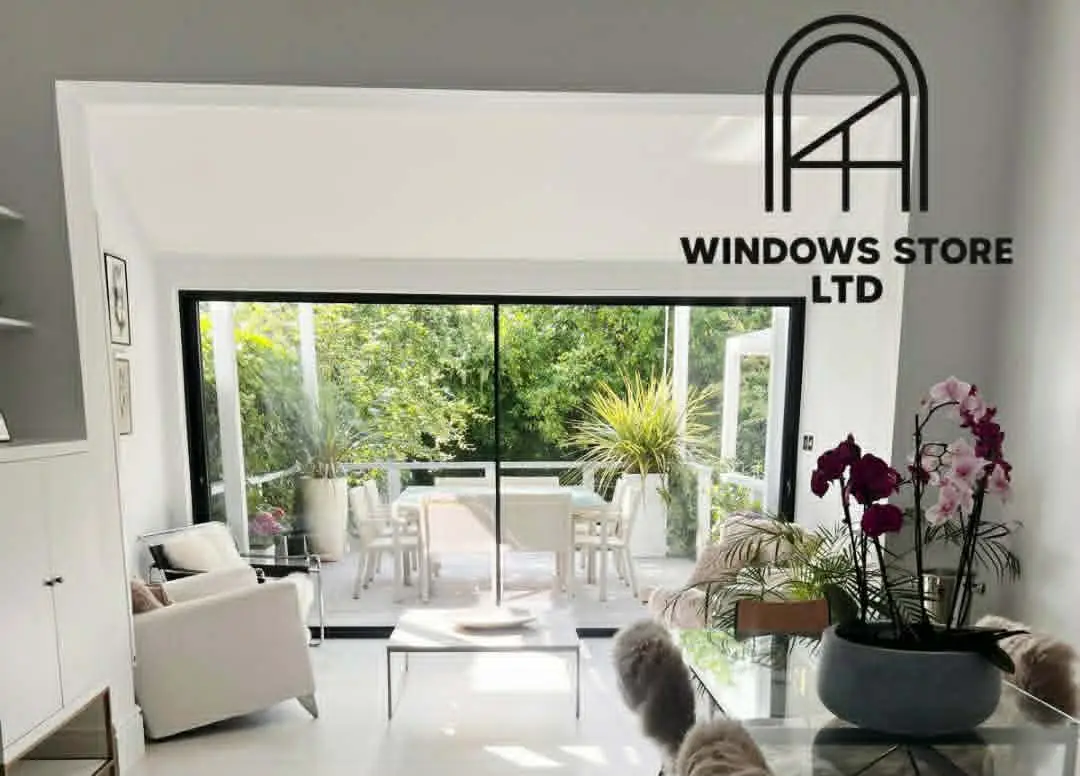
Sliding doors are the default choice on London rear extensions, and for good reason. They give the most glass for the opening, they don’t need space to swing or stack, and modern aluminium frames are slim enough that the view barely stops at the wall.
They’re also the product where two quotes for the same opening can differ by thousands, and where the difference isn’t visible in a brochure. Here’s what actually varies.
Sightlines
The sightline is the width of frame you see where two panels meet in the middle. It’s the number that decides how the doors look when they’re shut, which is how you’ll see them most of the time.
Slim systems get this down to around 20mm. Budget systems are closer to 50mm. On a three-panel door that’s the difference between a thin dark line and a visible post standing in the middle of your view.
Ask for the interlock sightline specifically. Suppliers sometimes quote the frame sightline instead, which is a different and more flattering number.
How many panels, and which way
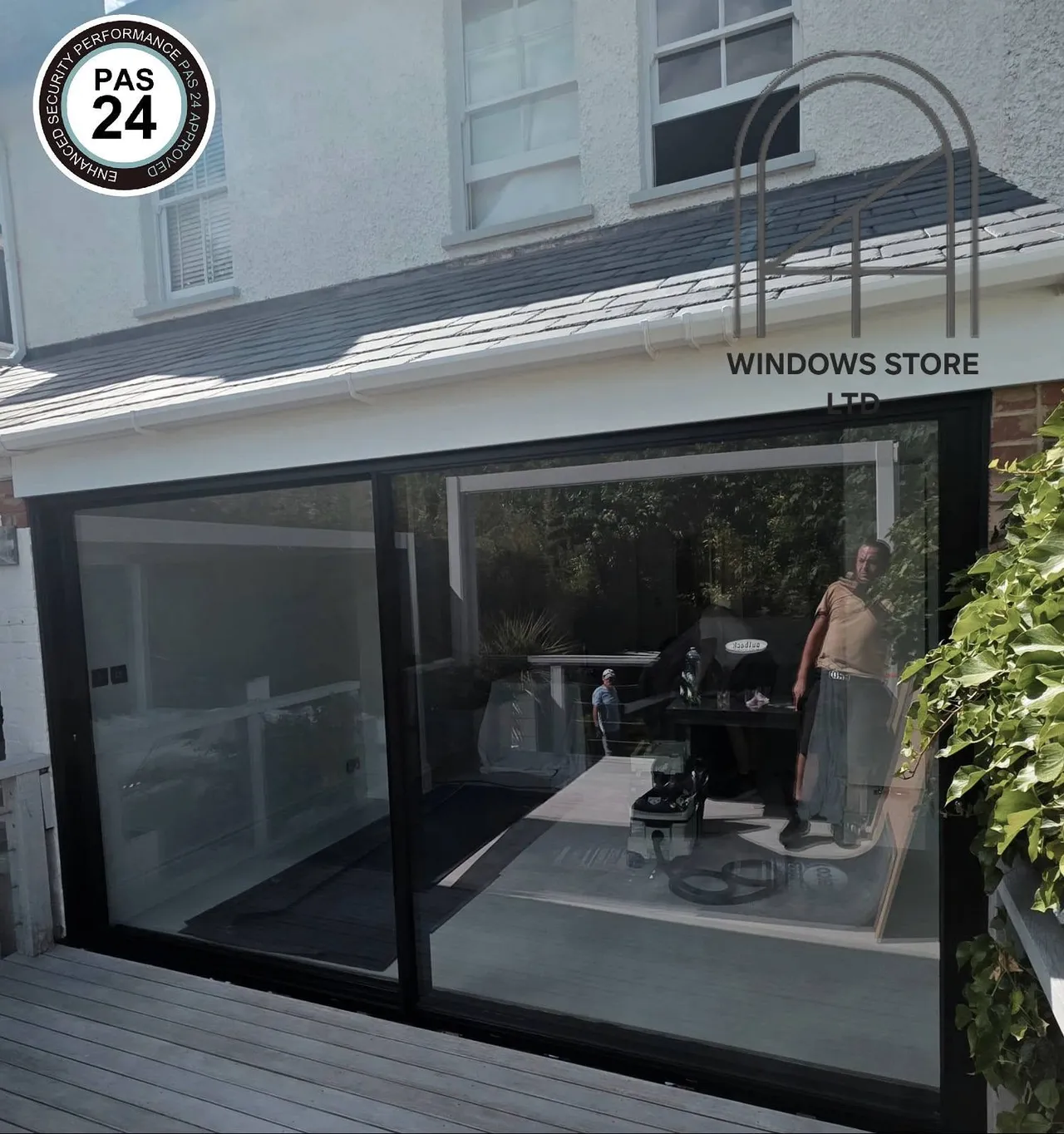
A two-panel door opens half the width. Three panels opening onto a single stack gives you two thirds. Four panels splitting to both sides opens the middle half, which sounds worse but often works better in practice because you walk through the centre.
Decide early which side the fixed panel sits, because it affects where furniture goes and which way you naturally walk out. It’s obvious once the doors are in and impossible to change afterwards.
Thresholds
This is where most problems start. A flush threshold sits level with the floor inside and out — it looks clean, there’s nothing to trip over, and it’s what everyone wants.
It’s also the harder detail to get right. Water needs somewhere to go, which means a drainage channel outside the door and a falls on the paving that actually runs away from the house. Done properly it’s fine for decades. Done badly you find out the first time rain comes in sideways.
A rebated threshold has a small upstand. Less elegant, considerably more forgiving. On an exposed elevation or where the outside level is tight, it’s the sensible choice even though nobody asks for it.
| Flush | Rebated | |
|---|---|---|
| Appearance | Seamless inside to out | Visible upstand |
| Water resistance | Depends on drainage detail | Good by design |
| Trip hazard | None | Small step |
| Cost of getting it wrong | High | Low |
Tracks and rollers
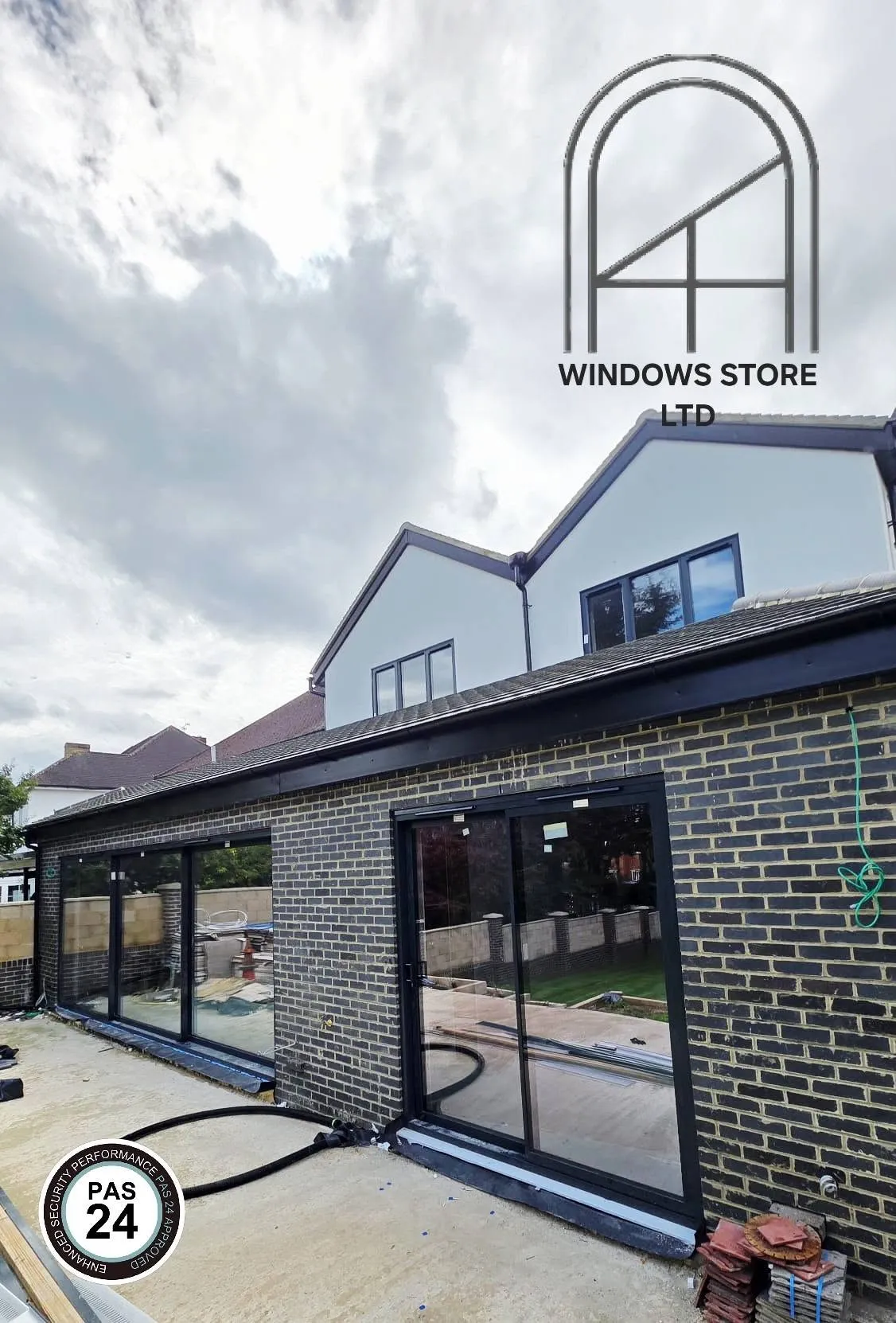
The panels are heavy — a large glazed panel can weigh over 150kg — and everything rests on the rollers. Stainless steel rollers in a stainless track last; cheaper systems use plated components that pit and stiffen.
Ask how the doors are adjusted and whether the rollers can be replaced without removing the glass. On a good system both are straightforward. On a poor one, a failed roller means taking the door apart.
Lift-and-slide mechanisms are worth knowing about for very large panels. The handle lifts the panel off its seals before it moves, which makes a heavy door feel light and improves the seal when it’s down. It costs more and it’s usually worth it above about three metres.
Glass and thermal performance
For a large expanse of south-facing glass, solar control coating matters more than the U-value. A room that overheats in July is a more common complaint than one that’s cold in January, and once the doors are in there’s little you can do about it.
Double glazing with a good coating handles most situations. Triple glazing adds weight, which means heavier hardware, and the gain is smaller than the brochures suggest on a door that’s already well specified.
What to ask for in a quote
Get the interlock sightline in millimetres, the threshold detail drawn rather than described, the roller specification, and confirmation of who is responsible for the drainage outside the door. That last one causes more arguments than anything else, because the door supplier assumes the builder is doing it and the builder assumes it came with the doors.
If a quote is significantly cheaper than the others, one of those four is usually where the money was saved.